Blog

A Stitch In Time Exhibition

A Stitch In Time Exhibition

We highly recommend a visit to “A Stitch in Time”, bringing together works by a new generation of artists working in the genre of fibre art today. 

About

"I learned to listen to threads and to speak their language." - Anni Albers

The most ubiquitous fibre in nature is cellulose, the primary component of all plant cell walls and the most abundant organic polymer on Earth. It is also a crucial, essential material for fabrication in every culture, invested with centuries of codified meaning. Artists like Sheila Hicks and Olga de Amaral draw influence from the textiles and ancient techniques in South America. They build on this legacy whilst experimenting with colour, materiality and pattern. As Anni Albers suggests, "Being creative is not so much the desire to do something, as the listening to that which wants to be done: the dictation of the materials." 

At Paul Smith, they love using materials in imaginative ways; this often leads to incorporating new methods of production and results in iconic new designs. For this exhibition, they have selected artists who share this spirit of reinvention, and challenge conventions in material, process, and form. Through experimentation and play, they weave, stitch, fold and thread through these conventions to find new modes of representation. In this process, they demonstrate how materials used in the growing category of “fibre art” can restore meaning to our relationship with the natural world and encode a message from this moment, a “stitch in time” that is deeply personal but often politically resonant. 

“A Stitch in Time”, brings together works by a new generation of artists working in the genre of fibre art today. These artists seek to defy classification and challenge artistic hierarchies. Some embrace specific techniques and heritages to incorporate layers of meaning into their work, whilst others push the boundaries of traditions and perceptions of the medium. By elevating embroidery and sewing craft techniques, they transform ready-made and second-hand fabrics into powerful reflections on identity and social issues. 

This show includes several exquisite pieces by Alice von Maltzahn working with a combination of stitch and Japanese Gampi Silk Conservation paper. (Ref: CON13736 XM) Find Alice at www.alicevonmaltzahn.com

Continue reading

The Creative Dimension Trust

The Creative Dimension Trust

The Creative Dimension Trust is a wonderful organisation enabling young people to develop fine hand skills with leading, international specialists.

We were so delighted to hold another introduction to bookbinding workshop on Sunday for a lovely group of young people at our London store in Gillingham Street.

Taught by Mylyn McColl, the students all produced a quarter cloth hardback book using our 'Art of The Book' tutorial.

TCDT offers workshops designed to equip talented young people with the skills and confidence to pursue careers where core hand skills—such as manual dexterity, draftsmanship, and the ability to understand and (re)construct three-dimensional structures—are essential.

Courses are free of charge for all successful applicants. Recruitment is conducted directly through schools located in areas of social and economic deprivation or geographic isolation. We aim for 80% of participants to come from underserved backgrounds.

Skills are taught by craft specialists who are acknowledged leaders in their fields. These are not children’s art classes—the aim is to learn, experiment, build confidence, draw inspiration from top professionals, and explore career opportunities. Students gain a clearer understanding of what is possible and how to achieve it.

In a time of school budget cuts, an increased focus on STEM subjects, and excessive screen time, underserved students often miss out on opportunities to develop fine motor skills and spatial awareness. These abilities are vital not only in creative industries—a vast employment sector—but also in fields such as architecture and medicine. Roger Kneebone, Professor of Surgical Education at Imperial College, warns that today’s medical students “might have high academic grades but cannot cut or sew,” due to a lack of craft experience.

While extracurricular programs and networks exist to support talent in areas like music and sport, there is no equivalent for crafts.

TCDT began with straightforward skills workshops where young people could learn from world-leading experts. Since then, TCDT has expanded to include a schools programme—where tutors deliver workshops directly in schools—and a work experience initiative designed to support students in developing their careers. Students use work completed during these sessions to strengthen applications for courses, work placements, and jobs. Read more about TCDT’s first 10 years here.

TCDT is reliant on donations to continue this vital work. We warmly encourage you to visit the donations page to learn more.

Continue reading

Fil Au Chinois 100% Linen Threads

Fil Au Chinois 100% Linen Threads

Sourced from Maison Sajou in Versailles, France. These wonderful waxed linen threads are now available in 3 weights and a selection of tempting colours. Originally developed as a thread suitable for stitching leather, they are also perfect for bookbinding projects. The 40/3 30 metre bobbins are perfect for general stitching of signatures and lighter weight papers. We also offer 24/3 which is a stronger grade in several colours and a heavier cable weight on 10 metre cards suitable for Coptic and Japanese style bindings and leather.


The name Fil au Chinois, dates back to a period in France when anything Oriental was extremely fashionable. This interest for the Orient became very popular after an expedition to Egypt in 1798, by Bonaparte (the future Napoléon), Algeria’s conquest by France (1830) and twenty-five years later the opening up of China and Japan only served to reinforce this fascination. The beginning of the brand Au Chinois was at the heart of this cultural movement. The creation of an easily identifiable character who is now legendary was born.

The brand was registered in 1847, by Francois-Philibert Vrau who founded his company in Lille twenty years beforehand. This was to protect an innovative method to present threads; spools with a label and placed in boxes.

Fil au Chinois really took off in the 1850’s with the arrival of Philibert Vrau, the director’s son. This remarkable person lead an unusual life. Single by choice, Philibert Vrau (1829-1905) never ceased to successfully run his company and donated all profits towards social causes. An important figure amongst Lillois businessmen, he was the main founder of ICAM, a Catholic Engineering School.

After a period of decline brought on by the onset of industrialisation and incompatibiity with seing machines, Fil Au Chinois thread could have been in danger of disappearing had it not been for two, determined industrialists, Olivier and Bruno Toulemonde.In charge of Ets Toulemonde, one of the last remaining French thread manufacturers, the two brothers realised the importance of reviving and prolonging the history of Fil Au Chinois.


In 2007, Olivier and Bruno Toulemonde, determined to revive Fil Au Chinois and bring it back to its former glory, bought the branded product having overcome various difficulties amongst them putting machines back into working order, some dating back to 1890.

The present Maison Sajou was relaunched in 2005 by Frederique CRESTIN-BILLET, following a career in publication where she edited and created numerous illustrated books. Frederique started collecting vintage haberdashery at a very young age, especially colour charts, thread boxes and the famous little Sajou albums.


Continue reading

Handmade Nepalese Papers

Handmade Nepalese Papers

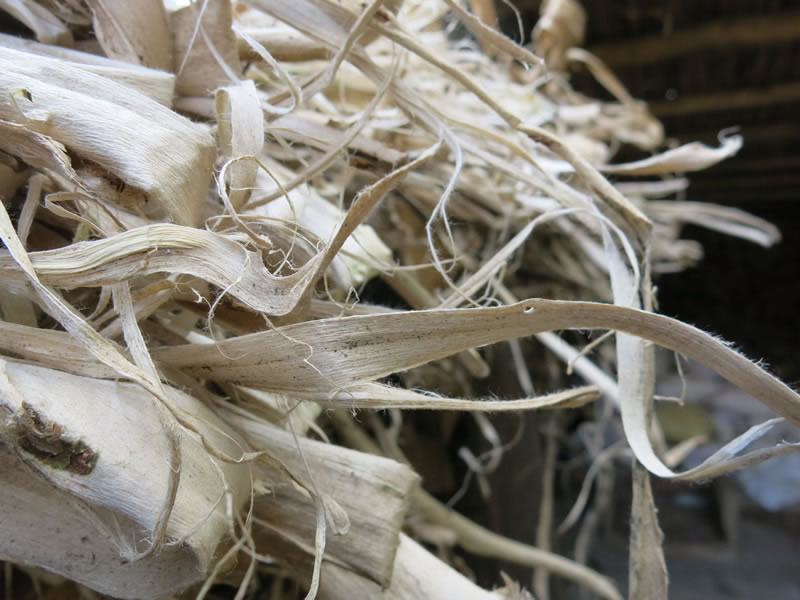
Our Nepalese papers produced by Khadi are made from the inner bark fibre of lokta or argeli, plants that grow in the high altitude forests of the Himalayan foothills.  Lokta (daphne bholua) grows above 3000 metres and produces a strong durable paper.  Argeli (edgeworthia papyrefera) is found above 2000 metres and makes a softer, more delicate paper.  Argeli fibre is also used for papermaking in Japan where it is called mitsumata. Our code for the mitsumata paper: K30JM3

These fibres are a renewable resource. Plants are cropped above ground level and re-grow from the radial root. They can be reharvested after 3 to 4 years.

The stripped bark is boiled in an alkali solution which breaks down the lignin in the cell walls allowing the fibres to separate. Traditionally a lye of ashes was used for this purpose, formed by dripping water through a basket of hardwood ashes. In the last 20 to 30 years this has been replaced throughout Nepal by caustic soda. Caustic soda, however, damages the fibres producing paper that lacks the strength and durability of traditional Nepalese papers. Lokta papers produced by Khadi are the only papers produced in Nepal using soda ash instead of caustic soda. This does not harm the fibres and results in papers of a quality not seen in Nepal for a generation. The run-off can also be used as a fertiliser so the environmental impact is actually a positive one.

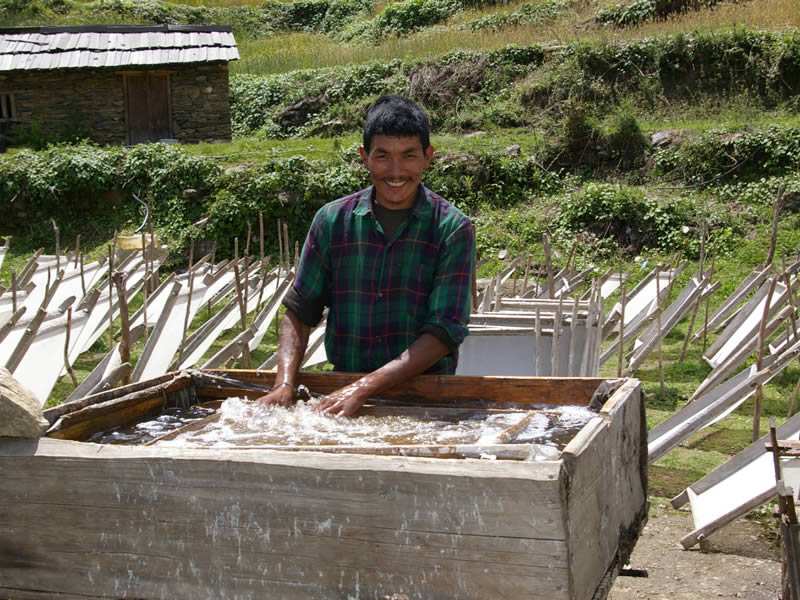
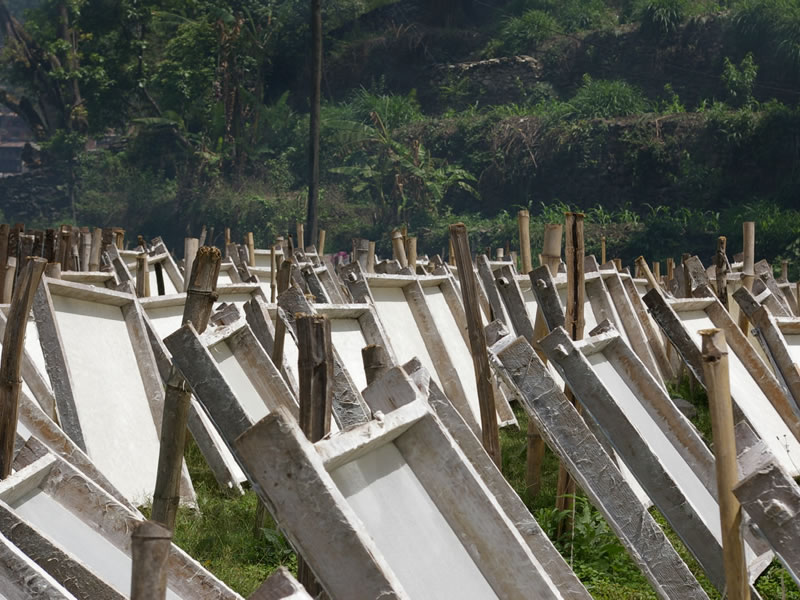
These handmade lokta papers are made on a traditional Nepalese paper mould which is a wooden frame with a thin cotton cloth stretched over its surface.  The paper is dried on the frame which is propped up and angled towards the sun. This is the most primitive way of making paper, unchanged for over 1000 years.

Our Nepalese 'washi' is paper made using the Japanese dipping and layering method called nagashizuki.  In this method the sheet is formed on a mat of fine bamboo called a su. The wet sheet is transferred from the su onto a pile of sheets which are then pressed to remove water.  No interleaving with felts is necessary.  The sheets of paper are carefully separated and brushed onto zinc sheets to dry.

These papers are suitable for a variety of projects - painting, drawing, printmaking and crafts.

Find these characterful sheets in our Handmade Asian Paper departments, We offer the Lokta papers in natural or in the lighter weights also as dyed coloured sheets.

*Images courtesy of Khadi Papers.


Continue reading

The Japanese Crane: Meaning & Symbolism

The Japanese Crane: Meaning & Symbolism
A majestic bird with a wingspan of over 2 metres, the Japanese crane is among the most emblematic creatures of the archipelago. The ultimate muse, it is appreciated for its beauty and its spiritual significance. In Japanese Culture, the crane or 'Tsuru' is considered a mystical creature, close to the Kamisama (Japan's native Shinto deities). It is also a symbol of peace, good luck, longevity, success and happiness. According to Japanese legend those that can fold a thousand cranes will get their wish granted. Tradition has it that the crane carries the souls of the dead to paradise.
Find this beautiful creature depicted on our beautiful silk screened Chiyogami papers and Sogara papers in our decorative Japanese Paper department.
Continue reading